Wht Did Roosevelt Break His Promise Not to Run Again for President in 1908
 | |||||||||||||||||||||||||||||
| 483 members of the Balloter Higher 242 electoral votes needed to win | |||||||||||||||||||||||||||||
|---|---|---|---|---|---|---|---|---|---|---|---|---|---|---|---|---|---|---|---|---|---|---|---|---|---|---|---|---|---|
| Turnout | 65.4%[1]  0.two pp 0.two pp | ||||||||||||||||||||||||||||
| |||||||||||||||||||||||||||||
| Presidential ballot results map. Cherry-red denotes those won by Taft/Sherman, blue denotes states won by Bryan/Kern. Numbers bespeak the number of electoral votes allotted to each state. | |||||||||||||||||||||||||||||
| |||||||||||||||||||||||||||||


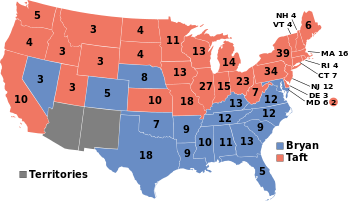

The 1908 Us presidential election was the 31st quadrennial presidential election, held on Tuesday, November 3, 1908. Secretary of War and Republican Party nominee William Howard Taft defeated three-time Autonomous nominee William Jennings Bryan.
Pop incumbent President Theodore Roosevelt honored his hope non to seek a third term, and persuaded his close friend, Taft, to become his successor. With Roosevelt's support, Taft won the presidential nomination of the 1908 Republican National Convention on the first ballot. Having lost the 1904 ballot badly, the Democratic Party re-nominated Bryan, who had been defeated in 1896 and 1900 by Republican William McKinley. Despite his ii previous defeats and the waning of the Free Silver upshot, Bryan remained extremely popular among the more than liberal and populist elements of the Democratic Party.
Bryan ran a vigorous campaign against the nation's business elite, just the Democrat suffered the worst loss of his iii presidential campaigns in the pop vote, as well equally his worst defeat in terms of the electoral vote percentage. Taft won 51.half-dozen% of the popular vote and carried most states outside of the Solid Due south. Taft's triumph gave Republicans their 4th directly presidential election victory. 2 third-party candidates, Eugene V. Debs of the Socialist Political party and Eugene W. Chafin of the Prohibition Party, each took over one% of the popular vote.
Nominations [edit]
Republican Party nomination [edit]
Nominees [edit]
| | |||||||||||||||||||||||||||||
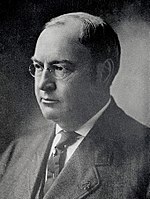
| William Howard Taft | James South. Sherman | ||||||||||||||||||||||||||||
|---|---|---|---|---|---|---|---|---|---|---|---|---|---|---|---|---|---|---|---|---|---|---|---|---|---|---|---|---|---|
| for President | for Vice President | ||||||||||||||||||||||||||||
| | | ||||||||||||||||||||||||||||
| 42nd U.Due south. Secretary of War (1904–1908) | U.S. Representative for New York's 27th (1903–1909) | ||||||||||||||||||||||||||||
 | |||||||||||||||||||||||||||||


Candidates [edit]
| Candidates in this section are sorted by delegates won | |||||||
| William H. Taft | Philander C. Knox | Charles E. Hughes | Joseph Yard. Cannon | Charles W. Fairbanks | Robert M. La Follette | Joseph B. Foraker | Leslie M. Shaw |
|---|---|---|---|---|---|---|---|
| | | | | | | | |
| 42nd U.Southward. Secretary of State of war from Ohio (1904–1908) | 44th U.Due south. Attorney General from Pennsylvania (1901–1904) | 36th Governor of New York (1907–1910) | 35th House Speaker from Illinois (1903–1911) | 26th U.S. Vice President from Indiana (1905–1909) | U.S. Senator from Wisconsin (1906–1925) | U.Due south. Senator from Ohio (1897–1909) | 43rd U.Due south. Secretary of the Treasury from Iowa (1902–1907) |
| Delegates: 549 [2] [3] [4] [5] [6] | Delegates: 67 [2] [6] | Delegates: 54 [2] [vi] | Delegates: 46 [2] [vi] | Delegates: 32 [2] [6] | Delegates: 25 [2] [6] | Delegates: v [ii] [7] [vi] | Delegates: 0 [2] |
| Campaign | Campaign | Campaign | |||||


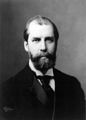


The Republican nomination contest marked the introduction of the presidential preference primary. The idea of the master to nominate candidates was sponsored by anti-automobile politicians such as New York Governor Charles Evans Hughes and Senator Albert B. Cummins. The first land to hold a presidential primary to select delegates to a national convention was Florida in 1904, when Democratic Political party voters held a master amongst uninstructed candidates for delegate. Early in 1908, the only two Republican contenders running nationwide campaigns for the presidential nomination were Secretary of War William Howard Taft and Governor Joseph B. Foraker, both of Ohio. In the nomination contest, four states held primaries to select national convention delegates. In Ohio, the land Republican Party held a primary on February 11. Candidates pledged to Taft were printed on the election in a Taft column, and candidates pledged to Foraker were printed in a cavalcade under his proper name. Taft won a resounding victory in Ohio. The three states holding primaries to select delegates without the preference component were divide: California chose a slate of delegates that supported Taft; Wisconsin elected a slate that supported Wisconsin Senator Robert M. La Follette, Sr., and Pennsylvania elected a slate that supported its Senator Philander C. Knox.
The 1908 Republican Convention was held in Chicago between June 16 and 19. William Howard Taft was nominated with 702 votes to 68 for Knox, 67 for Hughes, 58 for Cannon, xl for Fairbanks, 25 for La Follette, 16 for Foraker, 3 for President Roosevelt, and one abstention.[8]
| Presidential Ballot | ||
| Candidate | 1st | Unanimous |
| William Howard Taft | 702 | 980 |
|---|---|---|
| Philander C. Knox | 68 | - |
| Charles Evans Hughes | 67 | - |
| Joseph Gurney Cannon | 58 | - |
| Charles Westward. Fairbanks | 40 | - |
| Robert Chiliad. La Follette | 25 | - |
| Joseph B. Foraker | sixteen | - |
| Theodore Roosevelt | three | - |
| Not Voting | 1 | - |
[ix]
Representative James S. Sherman from New York received the vice-presidential nomination.
| Vice-Presidential Ballot | ||
| Candidate | 1st | Unanimous |
| James Southward. Sherman | 816 | 980 |
|---|---|---|
| Franklin Murphy | 77 | - |
| Curtis Order, Jr. | 75 | - |
| George L. Sheldon | x | - |
| Charles W. Fairbanks | 1 | - |
| Not Voting | 1 | - |
[10]
Democratic Party nomination [edit]
Nominees [edit]
| | |||||||||||||||||||||||||||||
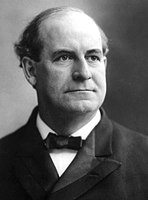
| William Jennings Bryan | John W. Kern | ||||||||||||||||||||||||||||
|---|---|---|---|---|---|---|---|---|---|---|---|---|---|---|---|---|---|---|---|---|---|---|---|---|---|---|---|---|---|
| for President | for Vice President | ||||||||||||||||||||||||||||
| | | ||||||||||||||||||||||||||||
| Former U.South. Representative for Nebraska's 1st (1891–1895) | Former Indiana Land Senator (1893–1897) | ||||||||||||||||||||||||||||
| Campaign | |||||||||||||||||||||||||||||
 | |||||||||||||||||||||||||||||


Candidates [edit]
| Candidates in this section are sorted by delegates won | ||||||||
| William J. Bryan | John A. Johnson | George Gray | Jesse R. Grant | |||||
|---|---|---|---|---|---|---|---|---|
| | | | | |||||
| U.Due south. Representative for Nebraska'south 1st District (1891–1895) | 16th Governor of Minnesota (1905–1909) | Federal Appeals Guess from Delaware (1899–1914) | Engineer and Businessman from California | |||||
| Delegates: 549 [11] | Delegates: 25 [xi] | Delegates: six [xi] | Delegates: 0 [11] | |||||
| Campaign | ||||||||


| President | Vice President | ||
|---|---|---|---|
| √ William J. Bryan | 888.5 / Unanimous | √ John Westward. Kern | Unanimous |
| George Gray | 59.5 | ||
| John A. Johnson | 46 | ||
| Not Voting | 8 | ||
As the 1908 election approached, William Jennings Bryan was the front-runner for the Autonomous presidential nomination. Bryan's near formidable challenger for the nomination was Minnesota Governor John Albert Johnson. Johnson's rags-to-riches story, honesty, reformist credentials, and ability to win in a heavily Republican state made him pop within the Democratic Party. In March, the Minnesota Democratic State Convention endorsed Johnson for president. By the cease of June, however, Bryan had amassed more than than the requisite two-thirds of the delegates needed for nomination.
The 1908 Democratic National Convention was held in Denver between July 7 and 10. Johnson, aware of the fact that Bryan'southward nomination was a foregone decision, released his delegates, thereby allowing Bryan to win the nomination on the first ballot.[12]
Bryan left the option of vice-president to the delegates. John W. Kern from Indiana was unanimously declared the candidate for vice-president without a formal election later on the names of Charles A. Towne, Archibald McNeil, and Clark Howell were withdrawn from consideration. Kern was a former land senator (1893-1897) and two-time gubernatorial candidate (1900 and 1904).
In response to nomination of Bryan and Kern, The New York Times disparagingly pointed out that the Democratic national ticket was consistent because "a man twice defeated for the Presidency was at the caput of information technology, and a human being twice defeated for governor of his state was at the tail of it."[12]
Third parties and independents [edit]
People'due south Party nomination [edit]
Nominees [edit]
| 1908 People's Political party ticket | |||||||||||||||||||||||||||||
| Thomas E. Watson | Samuel Williams | ||||||||||||||||||||||||||||
|---|---|---|---|---|---|---|---|---|---|---|---|---|---|---|---|---|---|---|---|---|---|---|---|---|---|---|---|---|---|
| for President | for Vice President | ||||||||||||||||||||||||||||
| | | ||||||||||||||||||||||||||||
| One-time U.S. Representative for Georgia'south 10th District (1891–1893) | Sometime State Representative from Indiana (1885–1887) | ||||||||||||||||||||||||||||
| Entrada | |||||||||||||||||||||||||||||
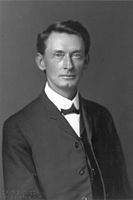
In 1904 the national Populist Party ticket fared fairly well. Its total was twice the party'southward total in the previous presidential election, and in ten states, it received over one% of the vote. It also offered 47 candidates for the Firm of Representatives, though the only ones elected were cross-endorsed by one of the major parties. The party remained in fusion with either the Democrats or the Republicans in many states.
The following three years were a trying time for the party. When Democrats began to telephone call for the nomination of Bryan in 1908, western Populist leader Thomas Tibbles appear that the People'south Party would probably not support him since he had gone into the hands of the Eastern business concern interests.[thirteen] Ii months later, Nebraska Democrats decided in their land convention to end fusion with the Populists, but they changed their heed subsequently an all-night conference.[14] In the midterm elections the party just offered ten candidates for House, and the Kansas People's Party officially disbanded in Dec when that state party's leader appear that he was joining the Republicans.[15]
By late 1907, many Populists were hoping that Thomas Watson would agree to run for president again. The previous three years had been unusual for Watson. He gave a speech to a gathering of farmers in Greensborough, Georgia and while preparing for supper, the house where he was staying was burned.[sixteen] In mid-1906, Watson called on Georgia Populists to vote for Hoke Smith for governor in the Democratic primary, which fueled speculation that Watson was thinking of returning to the Democrats.[17] In early 1907, Watson started a network of Populist-leaning publications to keep the political party's principles alive; Tibbles was called to serve every bit the primary editor.[xviii] One month after, someone fired shots into the Watsons' firm in Augusta.[xix] He had an altercation with an African-American porter on a railroad train; when the porter said that he was unable to increment the train's speed, Watson hit the man in the face with the cap of his cane.[20]
The People's Political party National Committee met on November 26, 1907, to brand preparations for the 1908 national convention. National chairman James Ferriss indicated that Thomas Watson was the front runner for the nomination, saying that the party hoped to forge an brotherhood with i or more than of the other modest parties, including possibly the Independence League or the Prohibitionists.[21] In early 1908, even so, at least one fellow member of the national committee believed that Senator Robert La Follette of Wisconsin would win the Populist nomination.[22]
On the first solar day of the convention, the delegation from Nebraska worked to adjourn the convention; they had already decided to support Bryan if he became the Autonomous nominee. They managed to filibuster the official organisation of the convention all solar day. One of their delegates, A.G. Walling of Nebraska, told the New York Times "we shall bolt if the convention attempts to nominate Thomas E. Watson, or any one else. We are not alone, for we have assurances that Minnesota, Georgia, and mayhap Michigan and Kansas will walk out when we do".[23]
The convention was organized on the second day and completed all its relevant business. Watson supporters chose George A. Honnecker of New Jersey to serve every bit the permanent chairman, defeating the Bryan supporters' option, Jacob Coxey. The platform chosen for inflation of the currency, public ownership of railroads, telephones, and telegraphs, labor legislation, and a ban on futures gambling. When the time for nominations began, a schism took place; Watson's name was placed in nomination, and the Nebraska delegation bolted. They were followed past T.J. Weighan, the sole delegate from Minnesota. Watson was and so nominated for president; his running mate was Samuel Williams of Indiana.[24]
[edit]
Nominees [edit]
| 1908 Socialist Party ticket | |||||||||||||||||||||||||||||
| Eugene V. Debs | Benjamin Hanford | ||||||||||||||||||||||||||||
|---|---|---|---|---|---|---|---|---|---|---|---|---|---|---|---|---|---|---|---|---|---|---|---|---|---|---|---|---|---|
| for President | for Vice President | ||||||||||||||||||||||||||||
| | | ||||||||||||||||||||||||||||
| Quondam State Senator from Indiana (1885–1889) | Printer and Labor Organizer from New York | ||||||||||||||||||||||||||||
| Campaign | |||||||||||||||||||||||||||||
 | |||||||||||||||||||||||||||||
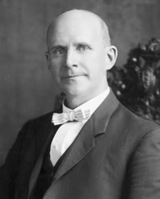

Candidates [edit]
| Candidates in this section are sorted by convention vote | ||||
| Eugene 5. Debs | James F. Carey | Carl D. Thompson | Algie Thousand. Simons | Maximillian S. Hayes |
|---|---|---|---|---|
| | | | | |
| One-time State Senator from Indiana (1885–1889) | Former State Representative from Massachusetts (1899–1903) | Country Representative from Wisconsin (1906–1908) | Former Editor of the International Socialist Review from Illinois (1900–1908) | Editor of the Cleveland Denizen from Ohio (1891–1940) |
| Delegates: 159 | Delegates: 16 DTBN | Delegates: 14 | Delegates: 9 | Delegates: 0 DTBN |
| [25] | [25] | [25] | [25] | [25] |


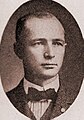
The radical members of the political party supported giving the nomination to Bill Haywood. Debs' wellness was in question until Ben Hanford, a fellow member of the New York delegation, read a letter of the alphabet from Debs stating that he was in practiced wellness and would give his support to whoever won the nomination. Seymour Stedman, an opponent of Debs, proposed Algie Martin Simons, who had the back up of the right-wing in the party, for the nomination. Victor L. Berger proposed Carl D. Thompson for the nomination and it was seconded by Winfield R. Gaylord and Carolyn Lloyd Strobell. James F. Carey was nominated by Ida Crouch-Hazlett. Max S. Hayes nomination was seconded by Alfred Wagenknecht. Phillip H. Callery nominated Debs on May 14, 1908, and it was seconded by John Spargo and he won the nomination on the first ballot with 159 votes out of the 198 cast. A move past Berger and Stedman to make the selection unanimous was approved. Carey's name was put up for the vice-presidential nomination by the Massachusetts, Minnesota, and Montana delegations, but he declined to run and Caleb Lipscomb as well declined. Hanford won the vice-presidential selection with 106 votes on the first election and was later made unanimous. Debs' entrada was managed by J. Mahlon Barnes.[27] [28] [29] [xxx] This was the first fourth dimension that a candidate besides Debs had been nominated for the Socialist presidential nomination.[31]
Lincoln Steffens initially believed that Debs was not suitable for the presidency, simply afterward told Brand Whitlock, the mayor of Toledo, Ohio, to vote for Debs after Steffens interviewed Debs and Berger. Haywood fundraised for the buy of a railroad train, which had over 200,000 contributors, that was later named the Red Special. Debs' train left on August 30, 1908, and traveled over nine,000 miles and gave 187 speeches over twenty-5 days. Twenty-two one thousand thousand copies of Appeal to Reason were distributed during the campaign and the newspaper gained 50,000 subscribers.
Theodore Roosevelt believed that the Socialists would take progressive votes away from Taft and stated that Debs' speeches were "mere pieces of the literature of criminal violence". Samuel Gompers, the president of the American Federation of Labor and who had endorsed Bryan, criticized Debs accusing him of receiving cloak-and-dagger funding for his train from the Republicans. The Socialists published the names of every contributor to the train fund and the amount they donated and too challenged Gompers to a fence, merely he refused. Former President Grover Cleveland and Chicago Tribune predicted that the Socialists would receive over i million votes.
Debs hoped to receive over a million votes, simply only received 420,852 votes which was a 20,000 vote increase from the 1904 election. Debs stated that the reason for the small increase was due to Democrats who had supported him in 1904 over Parker had voted for Bryan and that those who remained were pure socialist votes.
| Presidential ballot | 1st election | 2nd ballot | Vice-presidential ballot | 1st ballot | 2nd ballot |
|---|---|---|---|---|---|
| Eugene V. Debs | 159 | Unanimous | Ben Hanford | 106 | Unanimous |
| James F. Carey | 16 | Seymour Stedman | 42 | ||
| Carl D. Thompson | 14 | May Wood Simons | 20 | ||
| Algie Martin Simons | ix | John W. Slayton | fifteen | ||
| Caleb Lipscomb | 1 | ||||
| George Due west. Woodbey | 1 | ||||
| Reference | [28] | [28] | [28] | [28] | [28] |
[edit]
Nominees [edit]
| 1908 Socialist Labor Political party ticket | |||||||||||||||||||||||||||||
| August Gillhaus | Donald L. Munro | ||||||||||||||||||||||||||||
|---|---|---|---|---|---|---|---|---|---|---|---|---|---|---|---|---|---|---|---|---|---|---|---|---|---|---|---|---|---|
| for President | for Vice President | ||||||||||||||||||||||||||||
| | | ||||||||||||||||||||||||||||
| Engineer from New York | Machinist from Virginia | ||||||||||||||||||||||||||||

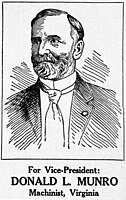
The Socialist Labor Party met in New York, New York from July 2 to July 5 in Arlington Hall, St. Mark'due south Place. While increasingly dwarfed by the growing membership of the Socialist Party led by Eugene Debs and Bill Haywood, Daniel De Leon and his compatriots remained committed to maintaining their dissever course, considering Debs and his platform as "reactionary".[32] An attempt was made to depose Leon from his position of editor of the Party's papers in favor of a more moderate candidate, fearing that Leon's writings were alienating voters who might otherwise exist sympathetic to their cause. The written report was overwhelmingly voted down later Leon spoke in defense of his conduct as the Political party's editor, with a rival report being adopted praising his leadership.[33] When it came time for the nominations, Leon personally nominated Martin Preston of Nevada, who was currently serving a twenty-five year sentence for the murder of Anton Silva. While noting that Preston was only 32 at the time, Leon remarked that "it was for the working people to elect Preston, and if he was elected he would be seated". Preston's nomination was ratified unanimously, with Donald Munro of Virginia winning in a contest against Arthur S. Dower of Texas for the vice presidential nomination. The nominations were later formalized at Cooper Union following the close of the convention.[34]
Only days afterward however Martin Preston replied in a telegram that he could non accept the Presidential nomination, a declination that had not been expected nor prepared for.[35] August Gillhaus of New York was later then nominated in Preston'due south stead.
Prohibition Political party nomination [edit]
Nominees [edit]
| 1908 Prohibition Party ticket | |||||||||||||||||||||||||||||
| Eugene W. Chafin | Aaron S. Watkins | ||||||||||||||||||||||||||||
|---|---|---|---|---|---|---|---|---|---|---|---|---|---|---|---|---|---|---|---|---|---|---|---|---|---|---|---|---|---|
| for President | for Vice President | ||||||||||||||||||||||||||||
| | | ||||||||||||||||||||||||||||
| Attorney at Police force from Illinois | Professor and Methodist Minister from Ohio | ||||||||||||||||||||||||||||
| Campaign | |||||||||||||||||||||||||||||
 | |||||||||||||||||||||||||||||


The Prohibition Party met in Columbus, Ohio on July 14 and 15 to nominate their presidential ticket. Eugene Chafin was nominated on the tertiary ballot in an open contest. When the runner-up for the Presidential nomination William Palmore, a Methodist Minister from Missouri and Editor of the St. Louis Christian Advocate, declined his nomination for the Vice Presidency, the convention hurriedly allowed for a new set of nominations and another ballot. Aaron Watkins of Ohio would win a majority on the commencement ballot.
| President (Note) | Vice President [36] | |||||||
| Candidate | 1st | 2nd | 3rd | Unanimous | Candidate | Unanimous | 1st | Unanimous |
| √ Eugene W. Chafin | 195 | 376 | 636 | 1,087 | √ Aaron S. Watkins | - | ? | 1,087 |
|---|---|---|---|---|---|---|---|---|
| William A. Palmore | 273 | 418 | 415 | - | William A. Palmore | 1,087 | - | - |
| Alfred Fifty. Manierre | 159 | 121 | four | - | T. B. Demaree | - | ? | - |
| Daniel R. Sheen | 124 | 157 | 12 | - | Charles S. Holler | - | ? | - |
| Will West. Tracy | 105 | 81 | 7 | - | - | - | - | - |
| Frederick F. Wheeler | 72 | 73 | - | - | - | - | - | - |
| Oliver W. Stewart | 61 | 47 | - | - | - | - | - | - |
| James B. Cranfill | 28 | - | - | - | - | - | - | - |
| George R. Stewart | 7 | - | - | - | - | - | - | - |
| Charles Scanlon | 1 | - | - | - | - | - | - | - |
Independence Party nomination [edit]
Nominees [edit]
| 1908 Independence Political party ticket | |||||||||||||||||||||||||||||
| Thomas L. Hisgen | John T. Graves | ||||||||||||||||||||||||||||
|---|---|---|---|---|---|---|---|---|---|---|---|---|---|---|---|---|---|---|---|---|---|---|---|---|---|---|---|---|---|
| for President | for Vice President | ||||||||||||||||||||||||||||
| | | ||||||||||||||||||||||||||||
| CEO of Hisgen Brothers from Massachusetts (1888–1927) | Newspaper Editor from Georgia | ||||||||||||||||||||||||||||


Candidates [edit]
| Candidates in this department are sorted by highest convention vote | |||||
| Thomas Fifty. Hisgen | John Temple Graves | Milford West. Howard | Reuben R. Lyon | William R. Hearst | William J. Bryan |
|---|---|---|---|---|---|
| | | | | | |
| CEO of Hisgen Brothers from Massachusetts (1888–1927) | Newspaper Editor from Georgia | Former U.S. Representative for Alabama's 7th District (1895–1899) | Attorney at Constabulary from New York | Former U.Southward. Representative for New York'due south 11th District (1903–1907) | Quondam U.S. Representative for Nebraska's 1st District (1891–1895) |
| Delegates: 831 | Delegates: 213 | Delegates: 200 | Delegates: 71 NW: Earlier 2nd Ballot | Delegates: 49 DTBN | Delegates: 0 NR |
| [37] | [37] | [37] | [37] | [37] | [37] |


Disappointed with his performance in the 1904 Democratic presidential nomination entrada, and disillusioned every bit to his chances of successfully attaining it in 1908, William Randolph Hearst decided to run instead on the ticket of a third party of his ain making. Originally borne from the Municipal Ownership League, a vehicle for Hearst'southward ultimately unsuccessful bid for the mayoralty of New York in 1905, it was Hearst's intention to fuse it with the remnants of the Populist Party led by Thomas Watson, a one-time Representative from Georgia who had been its presidential nominee in 1904. Nonetheless, these intentions were dashed when every candidate that the Independence Political party put forth in elections held in New York was elected except Hearst himself, despite an endorsement past the Democratic Party. Devastated, Hearst declared his intention never again to be a candidate.
While Hearst would no longer exist the nominee, he fully intended to exercise influence at Independence Party's convention; the platform itself was in big part a statement of his ain views. With its candidates nominated, the party's purpose was changed from being a path for Hearst'due south presidential ambitions to existence an instrument of his wrath. Through the influence of his papers and generous fiscal donations, Hearst hoped that the Independence ticket would draw abroad votes from William Jennings Bryan and pb to his defeat against Taft, a personal vendetta for Bryan failing to support his own bid for the Presidency in 1904.
| Presidential Ballot | |||
| 1st | second | 3rd | |
|---|---|---|---|
| Thomas L. Hisgen | 396 | 590 | 831 |
| John T. Graves | 213 | 189 | 7 |
| Milford W. Howard | 200 | 109 | 38 |
| Reuben R. Lyon | 71 | 0 | 0 |
| William R. Hearst | 49 | 49 | 2 |
[38]
General election [edit]
Campaign [edit]

The aging and balding "Boy Orator of the Platte" delivers a speech.
With the Free Silvery event no longer dominant, Bryan campaigned on a progressive platform attacking "government past privilege." His campaign slogan, "Shall the People Rule?", was featured on numerous posters and campaign memorabilia. However, Taft undercut Bryan's liberal support by accepting some of his reformist ideas, and Roosevelt's progressive policies blurred the distinctions between the parties. Republicans also used the slogan "Vote for Taft now, you can vote for Bryan anytime," a sarcastic reference to Bryan's 2 failed previous presidential campaigns.
The Socialist candidate, Eugene Debs, embarked on an ambitious whistle-stop tour aboard a train nicknamed the Crimson Special, giving speeches regarding the Socialist cause beyond the country. The exertion of the bout exhausted Debs, and at sure points his brother Theodore - who bore a smashing resemblance to Eugene - substituted for him to allow the candidate to rest.[39]
Businessmen continued to support the Republican Party, and Bryan failed to secure the support of labor. Equally a result, Bryan concluded up with the worst of his three defeats in the national pop vote. He lost about all the northern states to Taft and the popular vote by 8 percentage points.
This would be Bryan's last campaign for the presidency, although he would remain a popular figure within the Democratic Party and in 1912 would play a key role in securing the presidential nomination for Woodrow Wilson. Charles Due west. Bryan, William's brother, would become the (losing) Democratic nominee for Vice President in 1924. Bryan'southward 162 electoral votes from this election, combined with his 155 and 176 electoral votes from 1900 and 1896 respectively, brand him the person with the most electoral votes never to exist president.
Results [edit]

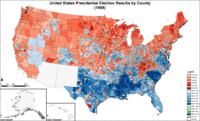
Results by canton explicitly indicating the percentage for the winning candidate. Shades of red are for Taft (Republican), shades of bluish are for Bryan (Democratic), shades of light-green are for "Other(s)" (Non-Democratic/Non-Republican), grey indicates zero recorded votes, and white indicates territories not elevated to statehood.[twoscore]

Roosevelt handing over his policies to his political protégé, William H. Taft.
Forty-six states participated, every bit Oklahoma had joined the Marriage less than a year before. Bryan won forty-viii counties in the new country of Oklahoma. The most important increment in number of counties carried by Bryan was in the West South Cardinal section, in part due to the vote of newly admitted Oklahoma.[41]
Of the 2,858 counties making returns, Taft won in 1,494 (52.27%) while Bryan carried one,355 (47.41%). Nine (0.31%) counties recorded more votes cast for "Other(southward)" than either of the two-political party candidates, whilst twenty-8 counties (0.97%) recorded nix votes due to being inhabited either by Native Americans who would not proceeds full citizenship for sixteen years, or by disenfranchised southern African-Americans. Taft had a majority in 1,325 counties while Bryan had a majority in 1,204 counties.
Past carrying 1,355 counties, Bryan won more than counties than he had in 1900 (one,340), only he did not reach or surpass the number of counties he had won in 1896 (ane,559). While Bryan won more counties than McKinley in 1896, Bryan failed to carry more counties than the Republican candidate in 1900 or 1904. Compared with his strength in previous elections, however, Bryan carried 69 counties in 1908 which had non been Autonomous in either 1896 or 1900.[42]
Bryan increased the area carried past Democrats in every function of the country except New England and the South. He doubled the number of Democratic counties in Wisconsin and won more than counties in Indiana than were carried by plurality vote by the Democrats in any ballot in the Quaternary Political party Organisation except 1912. He made decided gains in Missouri and in his domicile land of Nebraska,[41] also achieving notable victories in Colorado and Nevada. However, in 4 Western states (Washington, Oregon, Wyoming, and North Dakota), in that location was non one Democratic county. This was truthful likewise of Michigan, Delaware, and each of the New England states.
The full vote increased greatly, by more than a million vis-à-vis 1904. Each party shared in the increase, just whereas Taft had most l grand more than than Theodore Roosevelt, Bryan had nearly 1,500,000 more votes than Alton Parker had garnered, and more than in either of his previous campaigns.
Information technology was noticeable that the "other" vote was just near vii thousand less than four years earlier. The "other" vote was a plurality in 9 counties in united states of america of Georgia and Texas.
The size of the vote bandage for the defeated Bryan in 1908 is clear evidence of perchance the most striking feature of the American presidential vote. In this third attempt at the presidency, and in an election following one in which the nominee of his party polled only 5 one thousand thousand votes, Bryan had heavy support in every section of the country, and in every country. Moreover, nearly two-thirds of the vote bandage for Bryan was from the fifteen states of the (Northeastern) Mid-Atlantic, East North Key, and West North Cardinal sections, in which the Democratic candidate carried simply 1 state (Nebraska).
Despite all conclusions as to predominant sentiment in the different sections and its economic, social, and political causes, in that location was a national vote bandage for Bryan, and it was urban equally well as rural; it was eastern, western, southern, and northern. Everywhere the Democratic Party was the minority political party, and information technology was not hopeless, nor was it helpless. It was the agency for the expression of the opposition of almost 6 and a one-half million voters.[42] According to Historian George E. Mowry:
- What was especially significant in the election was the continued growth in the forcefulness of the Democratic party and the success of the and then-called progressive Republican candidates in the Midwest. The Republicans had not only lost seats in the House of Representatives simply they had also lost governors in Ohio, Indiana, Minnesota, and North Dakota, all of which voted for Taft. In Wisconsin, Iowa, Nebraska, and even in Kansas cocky-announced progressive Republicans, who had previously defeated conservatives in the primaries, were more than successful in chirapsia their Democratic rivals. The ballot, The New York Times reported, had been punctuated with "independent voting." A closer analysis of the returns indicated that the voter in the Midwest had expressed his independence mostly from standpat Republicanism symbolized by the command of Speaker Cannon in the House and Aldrich in the Senate.[43]
As of 2021, this is the last of only two elections when Kansas and Nebraska take not voted for the same candidate.[a] The election of 1908 was the terminal ballot in which a Republican won the presidency without winning Nebraska, and the terminal in which Nebraska voted differently to Kansas and N Dakota.

| Presidential candidate | Party | Domicile country | Popular vote | Electoral vote | Running mate | |||
|---|---|---|---|---|---|---|---|---|
| Count | Percentage | Vice-presidential candidate | Home country | Electoral vote | ||||
| William Howard Taft | Republican | Ohio | 7,678,335 | 51.57% | 321 | James Schoolcraft Sherman | New York | 321 |
| William Jennings Bryan | Autonomous | Nebraska | 6,408,979 | 43.04% | 162 | John Worth Kern | Indiana | 162 |
| Eugene Victor Debs | Socialist | Indiana | 420,852 | two.83% | 0 | Benjamin Hanford | New York | 0 |
| Eugene Wilder Chafin | Prohibition | Illinois | 254,087 | ane.71% | 0 | Aaron Sherman Watkins | Ohio | 0 |
| Thomas Louis Hisgen | Independence | Massachusetts | 82,574 | 0.55% | 0 | John Temple Graves | Georgia | 0 |
| Thomas Edward Watson | Populist | Georgia | 28,862 | 0.19% | 0 | Samuel Wardell Williams | Indiana | 0 |
| August Gillhaus | Socialist Labor | New York | xiv,031 | 0.09% | 0 | Donald Fifty. Munro | Virginia | 0 |
| Other | ane,519 | 0.01% | — | Other | — | |||
| Total | fourteen,889,239 | 100% | 483 | 483 | ||||
| Needed to win | 242 | 242 | ||||||
Source (Popular Vote): Leip, David. "1908 Presidential Election Results". Dave Leip's Atlas of U.S. Presidential Elections . Retrieved September ten, 2012.
Source (Electoral Vote): "Electoral College Box Scores 1789–1996". National Archives and Records Administration. Retrieved July 31, 2005.
Geography of results [edit]

-

Results by county, shaded according to winning candidate's percentage of the vote
Cartographic gallery [edit]
-
Map of presidential election results past county
-
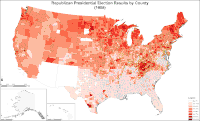
Map of Republican presidential ballot results past canton
-
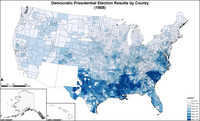
Map of Autonomous presidential election results by county
-

Map of "other" presidential ballot results by county
-

Cartogram of presidential ballot results by county
-

Cartogram of Republican presidential election results by canton
-
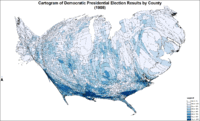
Cartogram of Autonomous presidential ballot results by county
-

Cartogram of "other" presidential ballot results by canton
Results past state [edit]
[44]
| William Howard Taft Republican | William Jennings Bryan Autonomous | Eugene V. Debs Socialist | Eugene Chafin Prohibition | Thomas Hisgen Independence | Thomas Watson Populist | Baronial Gillhaus Socialist Labor | Margin | Country Full | ||||||||||||||||||
|---|---|---|---|---|---|---|---|---|---|---|---|---|---|---|---|---|---|---|---|---|---|---|---|---|---|---|
| Country | electoral votes | # | % | electoral votes | # | % | electoral votes | # | % | electoral votes | # | % | electoral votes | # | % | electoral votes | # | % | electoral votes | # | % | balloter votes | # | % | # | |
| Alabama | xi | 25,561 | 24.31 | - | 74,391 | 70.75 | 11 | 1,450 | 1.38 | - | 690 | 0.66 | - | 497 | 0.47 | - | 1,576 | 1.50 | - | - | - | - | -48,830 | -46.44 | 105,152 | AL |
| Arkansas | ix | 56,624 | 37.30 | - | 87,015 | 57.31 | 9 | five,842 | 3.85 | - | one,026 | 0.68 | - | 289 | 0.19 | - | ane,026 | 0.68 | - | - | - | - | -xxx,391 | -20.02 | 151,822 | AR |
| California | 10 | 214,398 | 55.46 | 10 | 127,492 | 32.98 | - | 28,659 | 7.41 | - | 11,770 | three.04 | - | four,278 | 1.11 | - | - | - | - | - | - | - | 86,906 | 22.48 | 386,597 | CA |
| Colorado | 5 | 123,693 | 46.88 | - | 126,644 | 48.00 | 5 | 7,960 | 3.02 | - | 5,559 | 2.11 | - | - | - | - | - | - | - | - | - | - | -ii,951 | -1.12 | 263,858 | CO |
| Connecticut | 7 | 112,915 | 59.43 | 7 | 68,255 | 35.92 | - | v,113 | ii.69 | - | 2,380 | ane.25 | - | 728 | 0.38 | - | - | - | - | 608 | 0.32 | - | 44,660 | 23.fifty | 190,003 | CT |
| Delaware | 3 | 25,014 | 52.10 | iii | 22,055 | 45.94 | - | 239 | 0.50 | - | 670 | 1.forty | - | 29 | 0.06 | - | - | - | - | - | - | - | 2,959 | 6.16 | 48,007 | DE |
| Florida | five | 10,654 | 21.58 | - | 31,104 | 63.01 | 5 | three,747 | 7.59 | - | 1,356 | 2.75 | - | 553 | one.12 | - | 1,946 | 3.94 | - | - | - | - | -20,450 | -41.43 | 49,360 | FL |
| Georgia | 13 | 41,355 | 31.21 | - | 72,350 | 54.lx | 13 | 584 | 0.44 | - | ane,452 | 1.ten | - | 76 | 0.06 | - | 16,687 | 12.59 | - | - | - | - | -30,995 | -23.39 | 132,504 | GA |
| Idaho | 3 | 52,621 | 54.09 | 3 | 36,162 | 37.17 | - | 6,400 | 6.58 | - | ane,986 | 2.04 | - | 124 | 0.13 | - | - | - | - | - | - | - | xvi,459 | 16.92 | 97,293 | ID |
| Illinois | 27 | 629,932 | 54.53 | 27 | 450,810 | 39.02 | - | 34,711 | 3.00 | - | 29,364 | ii.54 | - | 7,724 | 0.67 | - | 633 | 0.05 | - | 1,680 | 0.fifteen | - | 179,122 | 15.l | ane,155,254 | IL |
| Indiana | fifteen | 348,993 | 48.40 | xv | 338,262 | 46.91 | - | thirteen,476 | 1.87 | - | xviii,045 | 2.l | - | 514 | 0.07 | - | 1,193 | 0.17 | - | 643 | 0.09 | - | x,731 | ane.49 | 721,126 | IN |
| Iowa | 13 | 275,209 | 55.62 | 13 | 200,771 | 40.58 | - | 8,287 | i.67 | - | 9,837 | one.99 | - | 404 | 0.08 | - | 261 | 0.05 | - | - | - | - | 74,438 | 15.05 | 494,769 | IA |
| Kansas | ten | 197,216 | 52.46 | 10 | 161,209 | 42.88 | - | 12,420 | 3.thirty | - | 5,033 | 1.34 | - | 68 | 0.02 | - | - | - | - | - | - | - | 36,007 | ix.58 | 375,946 | KS |
| Kentucky | 13 | 235,711 | 48.03 | - | 244,092 | 49.74 | 13 | 4,093 | 0.83 | - | 5,885 | 1.20 | - | 200 | 0.04 | - | 333 | 0.07 | - | 405 | 0.08 | - | -8,381 | -1.71 | 490,719 | KY |
| Louisiana | 9 | 8,958 | xi.93 | - | 63,568 | 84.63 | 9 | two,514 | 3.35 | - | - | - | - | 77 | 0.10 | - | - | - | - | - | - | - | -54,610 | -72.seventy | 75,117 | LA |
| Maine | vi | 66,987 | 63.00 | 6 | 35,403 | 33.29 | - | 1,758 | 1.65 | - | ane,487 | 1.40 | - | 700 | 0.66 | - | one | 0.00 | - | - | - | - | 31,584 | 29.70 | 106,336 | ME |
| Maryland | 8 | 116,513 | 48.85 | 2 | 115,908 | 48.59 | half-dozen | two,323 | 0.97 | - | iii,302 | 1.38 | - | 485 | 0.20 | - | - | - | - | - | - | - | 605 | 0.25 | 238,531 | MD |
| Massachusetts | 16 | 265,966 | 58.21 | sixteen | 155,543 | 34.04 | - | ten,779 | two.36 | - | 4,374 | 0.96 | - | 19,237 | 4.21 | - | - | - | - | 1,011 | 0.22 | - | 110,423 | 24.17 | 456,919 | MA |
| Michigan | fourteen | 335,580 | 61.93 | fourteen | 175,771 | 32.44 | - | xi,586 | 2.fourteen | - | sixteen,974 | 3.13 | - | 760 | 0.14 | - | - | - | - | 1,096 | 0.twenty | - | 159,809 | 29.49 | 541,830 | MI |
| Minnesota | 11 | 195,843 | 59.xi | 11 | 109,401 | 33.02 | - | fourteen,527 | four.38 | - | 11,107 | 3.35 | - | 426 | 0.13 | - | - | - | - | - | - | - | 86,442 | 26.09 | 331,304 | MN |
| Mississippi | ten | iv,363 | 6.52 | - | 60,287 | 90.11 | 10 | 978 | 1.46 | - | - | - | - | - | - | - | ane,276 | i.91 | - | - | - | - | -55,924 | -83.59 | 66,904 | MS |
| Missouri | 18 | 347,203 | 48.50 | 18 | 346,574 | 48.41 | - | fifteen,431 | 2.sixteen | - | iv,284 | 0.60 | - | 402 | 0.06 | - | 1,165 | 0.16 | - | 868 | 0.12 | - | 629 | 0.09 | 715,927 | MO |
| Montana | iii | 32,333 | 46.98 | 3 | 29,326 | 42.61 | - | v,855 | 8.51 | - | 827 | ane.20 | - | 481 | 0.70 | - | - | - | - | - | - | - | iii,007 | 4.37 | 68,822 | MT |
| Nebraska | 8 | 126,997 | 47.lx | - | 131,099 | 49.14 | 8 | 3,524 | 1.32 | - | 5,179 | 1.94 | - | - | - | - | - | - | - | - | - | - | -4,102 | -1.54 | 266,799 | NE |
| Nevada | 3 | 10,775 | 43.93 | - | 11,212 | 45.71 | three | ii,103 | eight.57 | - | - | - | - | 436 | i.78 | - | - | - | - | - | - | - | -437 | -1.78 | 24,526 | NV |
| New Hampshire | 4 | 53,149 | 59.32 | 4 | 33,655 | 37.56 | - | 1,299 | 1.45 | - | 905 | i.01 | - | 584 | 0.65 | - | - | - | - | - | - | - | nineteen,494 | 21.76 | 89,600 | NH |
| New Bailiwick of jersey | 12 | 265,298 | 56.80 | 12 | 182,522 | 39.07 | - | 10,249 | 2.19 | - | four,930 | 1.06 | - | 2,916 | 0.62 | - | - | - | - | i,196 | 0.26 | - | 82,776 | 17.72 | 467,111 | NJ |
| New York | 39 | 870,070 | 53.11 | 39 | 667,468 | xl.74 | - | 38,451 | two.35 | - | 22,667 | one.38 | - | 35,817 | 2.19 | - | - | - | - | iii,877 | 0.24 | - | 202,602 | 12.37 | 1,638,350 | NY |
| N Carolina | 12 | 114,887 | 45.49 | - | 136,928 | 54.22 | 12 | 372 | 0.15 | - | 354 | 0.14 | - | - | - | - | - | - | - | - | - | - | -22,041 | -eight.73 | 252,554 | NC |
| North Dakota | four | 57,680 | 61.02 | 4 | 32,885 | 34.79 | - | ii,421 | 2.56 | - | 1,496 | 1.58 | - | 43 | 0.05 | - | - | - | - | - | - | - | 24,795 | 26.23 | 94,525 | ND |
| Ohio | 23 | 572,312 | 51.03 | 23 | 502,721 | 44.82 | - | 33,795 | 3.01 | - | 11,402 | one.02 | - | 439 | 0.04 | - | 162 | 0.01 | - | 721 | 0.06 | - | 69,591 | half dozen.20 | 1,121,552 | OH |
| Oklahoma | 7 | 110,550 | 43.03 | - | 123,907 | 48.22 | 7 | 21,752 | 8.47 | - | - | - | - | 274 | 0.xi | - | 412 | 0.17 | - | - | - | - | -11,889 | -iv.66 | 256,917 | OK |
| Oregon | 4 | 62,530 | 56.39 | four | 38,049 | 34.31 | - | 7,339 | half-dozen.62 | - | 2,682 | 2.42 | - | 289 | 0.26 | - | - | - | - | 274 | 0.11 | - | 24,481 | 22.08 | 110,889 | OR |
| Pennsylvania | 34 | 745,779 | 58.84 | 34 | 448,782 | 35.41 | - | 33,914 | 2.68 | - | 36,694 | 2.90 | - | 1,057 | 0.08 | - | - | - | - | one,224 | 0.10 | - | 296,997 | 23.43 | one,267,450 | PA |
| Rhode Isle | 4 | 43,942 | 60.76 | iv | 24,706 | 34.16 | - | 1,365 | 1.89 | - | 1,016 | 1.40 | - | 1,105 | 1.53 | - | - | - | - | 183 | 0.25 | - | 19,236 | 26.60 | 72,317 | RI |
| South Carolina | nine | 3,945 | 5.94 | - | 62,288 | 93.84 | 9 | 100 | 0.15 | - | - | - | - | 46 | 0.07 | - | - | - | - | - | - | - | -58,343 | -87.89 | 66,379 | SC |
| South Dakota | four | 67,536 | 58.84 | 4 | 40,266 | 35.08 | - | 2,846 | 2.48 | - | four,039 | 3.52 | - | 88 | 0.08 | - | - | - | - | - | - | - | 27,270 | 23.76 | 114,775 | SD |
| Tennessee | 12 | 117,977 | 45.87 | - | 135,608 | 52.73 | 12 | 1,870 | 0.73 | - | 301 | 0.12 | - | 332 | 0.xiii | - | 1,092 | 0.42 | - | - | - | - | -17,631 | -6.86 | 257,180 | TN |
| Texas | eighteen | 65,666 | 22.35 | - | 217,302 | 73.97 | 18 | 7,870 | 2.68 | - | one,634 | 0.56 | - | 115 | 0.04 | - | 994 | 0.34 | - | 176 | 0.06 | - | -151,636 | -51.62 | 293,757 | TX |
| Utah | iii | 61,028 | 56.19 | 3 | 42,601 | 39.22 | - | iv,895 | iv.51 | - | - | - | - | 87 | 0.08 | - | - | - | - | - | - | - | xviii,427 | sixteen.97 | 108,613 | UT |
| Vermont | 4 | 39,552 | 75.08 | 4 | 11,496 | 21.82 | - | - | - | - | 799 | 1.52 | - | 804 | 1.53 | - | - | - | - | - | - | - | 28,056 | 53.26 | 52,680 | VT |
| Virginia | 12 | 52,572 | 38.36 | - | 82,946 | 60.52 | 12 | 255 | 0.19 | - | 1,111 | 0.81 | - | 51 | 0.04 | - | 105 | 0.08 | - | 25 | 0.02 | - | -30,374 | -22.16 | 137,065 | VA |
| Washington | v | 106,062 | 57.68 | 5 | 58,691 | 31.92 | - | 14,177 | 7.71 | - | 4,700 | 2.56 | - | 249 | 0.14 | - | - | - | - | - | - | - | 47,371 | 25.76 | 183,879 | WA |
| West Virginia | seven | 137,869 | 53.42 | 7 | 111,418 | 43.17 | - | 3,679 | 1.43 | - | five,139 | 1.99 | - | - | - | - | - | - | - | - | - | - | 26,451 | 10.25 | 258,105 | WV |
| Wisconsin | 13 | 247,747 | 54.52 | xiii | 166,662 | 36.67 | - | 28,147 | 6.19 | - | 11,565 | 2.54 | - | - | - | - | - | - | - | 318 | 0.07 | - | 81,085 | 17.84 | 454,441 | WI |
| Wyoming | 3 | twenty,846 | 55.43 | 3 | fourteen,918 | 39.67 | - | ane,715 | 4.56 | - | 66 | 0.eighteen | - | 64 | 0.17 | - | - | - | - | - | - | - | 5,928 | xv.76 | 37,609 | WY |
| TOTALS: | 483 | 7,678,335 | 51.57 | 321 | 6,408,979 | 43.04 | 162 | 420,852 | 2.83 | - | 254,087 | 1.71 | - | 82,574 | 0.55 | - | 28,862 | 0.19 | - | 14,031 | 0.09 | - | one,269,356 | 8.53 | 14,889,239 | The states |
Close states [edit]
Margin of victory less than 1% (34 balloter votes):
- Missouri, 0.09% (629 votes)
- Maryland, 0.25% (605 votes)
Margin of victory less than 5% (46 electoral votes):
- Colorado, 1.12% (two,951 votes)
- Indiana, 1.49% (10,731 votes)
- Nebraska, i.54% (4,102 votes)
- Kentucky, 1.71% (8,381 votes)
- Nevada, 1.78% (437 votes)
- Montana, 4.37% (three,007 votes)
- Oklahoma, 4.66% (11,889 votes)
Margin of victory between v% and ten% (60 electoral votes):
- Delaware, 6.16% (2,959 votes)
- Tennessee, 6.86% (17,631 votes)
- Ohio, 6.xx% (69,591 votes)
- North Carolina, 8.73% (22,041 votes)
- Kansas, nine.58% (36,007 votes)
Tipping signal state:
- West Virginia, 10.25% (26,451 votes)
Statistics [edit]
Counties with Highest Percentage of Vote (Republican)
- Leslie County, Kentucky 92.96%
- Unicoi County, Tennessee 92.77%
- Sevier County, Tennessee 91.44%
- Keweenaw Canton, Michigan 90.56%
- Johnson County, Tennessee 90.21%
Counties with Highest Percent of Vote (Democratic)
- Hampton County, South Carolina 100.00%
- Male monarch County, Texas 100.00%
- Garza County, Texas 100.00%
- Loving County, Texas 100.00%
- Wilcox County, Alabama 99.81%
Counties with Highest Percent of Vote (Other)
- Terry Canton, Texas 100.00%
- Glascock County, Georgia 69.97%
- McDuffie County, Georgia 64.31%
- Lincoln County, Georgia 61.65%
- Oconee Canton, Georgia 56.21%
Entrada memorabilia [edit]
-

Taft-Sherman postcard
-

Collier'southward magazine cover
-

Humorous postcard
-

John Johnson ribbon
-

Taft-Sherman postcard with U.S. Capitol
-

Bryan-Kern postcard with U.S. Capitol
Come across as well [edit]
- President of the Us
- History of the Usa (1865–1918)
- 1908 United States House of Representatives elections
- 1908 and 1909 United states of america Senate elections
- Inauguration of William Howard Taft
Notes [edit]
- ^ The other was in 1892 when Kansas voted for Populist James B. Weaver and Nebraska for Republican Benjamin Harrison
References [edit]
- ^ "Voter Turnout in Presidential Elections". The American Presidency Project. UC Santa Barbara.
- ^ a b c d eastward f g h "Newspaper clipping" (PDF). timesmachine.nytimes.com . Retrieved July 4, 2020.
- ^ "CHARGE FORGERY IN FLORIDA.; Representative Ames of Massachusetts Accused of Tricking Taftites". timesmachine.nytimes.com.
- ^ "Newspaper clipping" (PDF). timesmachine.nytimes.com . Retrieved July 4, 2020.
- ^ "Newspaper clipping" (PDF). timesmachine.nytimes.com . Retrieved July 4, 2020.
- ^ a b c d e f m "Newspaper clipping" (PDF). timesmachine.nytimes.com . Retrieved July 4, 2020.
- ^ "Newspaper clipping" (PDF). timesmachine.nytimes.com . Retrieved July 4, 2020.
- ^ Bain, Richard C.; Parris, Judith H. Convention Decisions and Voting Records. p. 174. ISBN0-8157-0768-1.
- ^ "Official study of the proceedings of the fourteenth Republican National Convention, held in Chicago, Illinois, June xvi, 17, 18 and 19, 1908". Archive.org . Retrieved Baronial xviii, 2016.
- ^ "Official study of the proceedings of the fourteenth Republican National Convention, held in Chicago, Illinois, June xvi, 17, 18 and 19, 1908". Annal.org . Retrieved Baronial 18, 2016.
- ^ a b c d "Newspaper clipping" (PDF). timesmachine.nytimes.com . Retrieved July 4, 2020.
- ^ a b "HarpWeek | Elections | The Democratic Nomination". Elections.harpweek.com. Retrieved September 23, 2017.
- ^ "Newspaper clipping" (PDF). timesmachine.nytimes.com . Retrieved July 4, 2020.
- ^ "Newspaper clipping" (PDF). timesmachine.nytimes.com . Retrieved July four, 2020.
- ^ "Paper clipping" (PDF). timesmachine.nytimes.com . Retrieved July 4, 2020.
- ^ "Paper clipping" (PDF). timesmachine.nytimes.com . Retrieved July 4, 2020.
- ^ "Newspaper clipping" (PDF). timesmachine.nytimes.com . Retrieved July four, 2020.
- ^ "Newspaper clipping" (PDF). timesmachine.nytimes.com . Retrieved July 4, 2020.
- ^ "Newspaper clipping" (PDF). timesmachine.nytimes.com . Retrieved July 4, 2020.
- ^ "Newspaper clipping" (PDF). timesmachine.nytimes.com . Retrieved July 4, 2020.
- ^ "Paper clipping" (PDF). timesmachine.nytimes.com . Retrieved July iv, 2020.
- ^ "Newspaper clipping" (PDF). timesmachine.nytimes.com . Retrieved July 4, 2020.
- ^ "Paper clipping" (PDF). timesmachine.nytimes.com . Retrieved July 4, 2020.
- ^ "Newspaper clipping" (PDF). timesmachine.nytimes.com . Retrieved July four, 2020.
- ^ a b c d e "Proceedings of the National Convention of the Socialist Party". July 4, 1908 – via Net Archive.
- ^ Haynes, Fred (1924). Social Politics in the Usa. The Riverside Printing Cambridge. p. 77.
- ^ a b c d e f Work, John M. (1908). Proceedings of the National Convention of the Socialist Party. Socialist Party of America.
- ^ Currie, Harold W. (1976). Eugene V. Debs. Twayne Publishers.
- ^ Karsner, David (1919). Debs - Authorized Life and Letters.
- ^ Coleman, McAlister (1930). Eugene V. Debs: A Human Unafraid. Greenberg Publisher.
- ^ "Newspaper clipping" (PDF). timesmachine.nytimes.com . Retrieved July 4, 2020.
- ^ "Newspaper clipping" (PDF). timesmachine.nytimes.com . Retrieved July 4, 2020.
- ^ "Newspaper clipping" (PDF). timesmachine.nytimes.com . Retrieved July iv, 2020.
- ^ "Paper clipping" (PDF). timesmachine.nytimes.com . Retrieved July 4, 2020.
- ^ "Newspaper clipping" (PDF). timesmachine.nytimes.com . Retrieved July 4, 2020.
- ^ a b c d eastward f "Newspaper clipping" (PDF). timesmachine.nytimes.com . Retrieved July 4, 2020.
- ^ "HISGEN AND GRAVES NEW PARTY TICKET – The Independence Convention Makes Its Selection in Early Morning. BRYAN'South NAME WAS HISSED Small Anarchism Followed Attempts to Nominate Him and His Sponsor Was Threatened by Delegates. HISGEN AND GRAVES NEW PARTY TICKET" (PDF). The New York Times. July 29, 1908. Retrieved August 18, 2016.
- ^ Morgan, H. Wayne (1958). ""Red Special": Eugene V. Debs and the Campaign of 1908". Indiana Magazine of History. 54 (iii): 211–236. Retrieved March 24, 2017.
- ^ The Presidential Vote, 1896–1932 – Google Books. Stanford University Press. 1934. ISBN9780804716963 . Retrieved Baronial 12, 2014.
- ^ a b The Presidential Vote, 1896–1932, Edgar East. Robinson, pg. 13
- ^ a b The Presidential Vote, 1896–1932, Edgar East. Robinson, pg. 14
- ^ George E. Mowry, The Era of Theodore Roosevelt, 1900-1912 (1958) p 231 online; citing The New York Times, November vii, 1908.
- ^ "1908 Presidential General Election Data – National". Uselectionatlas.org . Retrieved April 26, 2013.

William J Bryan in 1906 equally Moses with new x commandments; Puck xix sept 1906 by Joseph Keppler. Tablet reads: l-Thou shalt have no other leaders before me. 2—Grand shalt not make unto thyself whatever loftier Protective Tariff. Ill—Eight hours, and no more, shalt g labor and exercise all thy work. IV—K shalt not graft. Five—G shalt not elect thy Senators salve by Popular Vote. Half-dozen—Thou shalt non grant rebates unto thy neighbor. VII—Thou shalt not make combinations in restraint of merchandise. VIII—Thou shalt non covet thy neighbor'due south income, but shall make him pay a tax upon it. 9—There shall be no more government past injunction. X—Remember Election Mean solar day to vote it early. P.Southward.— When in doubtfulness, ask Me. [i]
Farther reading [edit]
- Coletta, Paolo E. The Presidency of William Howard Taft (1973) pp. ane–21.
- Coletta, Paolo E. "The Election of 1908" in Arthur M. Schlesinger, Jr. and Fred L State of israel, eds., History of American Presidential Elections: 1789-1968 (1971) 3: 2049–2131. online
- Coletta, Paolo Due east. William Jennings Bryan. I: Political Evangelist, 1860-1908 (U of Nebraska Press, 1964)
- Daniels, Josephus (July–December 1908). "Mr. Bryan'south Third Campaign". Review of Reviews. Review of Reviews. 38: 423–31.
- Fahey, James J. "Edifice Populist Discourse: An Analysis of Populist Communication in American Presidential Elections, 1896–2016." Social Science Quarterly 102.iv (2021): 1268-1288. online
- Glad, Paul West. The trumpet soundeth; William Jennings Bryan and his commonwealth, 1896–1912 (1960) online
- Korzi, Michael J., "William Howard Taft, the 1908 Ballot, and the Future of the American Presidency," Congress and the Presidency, 43 (May–Baronial 2016), 227–54.
- Mowry, George Due east. The Era of Theodore Roosevelt, 1900-1912 (1958). online
- Sarasohn, David. The Political party of Reform: Democrats in the Progressive Era (Upwardly of Mississippi, 1989), 35–58.
Primary sources [edit]
- Chester, Edward W A guide to political platforms (1977) online
- Porter, Kirk H. and Donald Bruce Johnson, eds. National political party platforms, 1840-1964 (1965) online 1840-1956
External links [edit]
- Presidential Election of 1908: A Resources Guide from the Library of Congress
- The Republican Entrada Textbook 1908
- Tim Davenport, "Red Special Across America," The Debs Project blog, June 23, 2019, Complete list of Debs bout stops.
- 1908 popular vote past counties
- How shut was the 1908 ballot? — Michael Sheppard, Massachusetts Institute of Applied science
- Election of 1908 in Counting the Votes [ permanent expressionless link ]
- ^ source Joseph Keppler in Puck (magazine) Sept nineteen, 1906; reprinted in: Smylie, James H. "William Jennings Bryan and the Cartoonists: A Pictorial Lampoon, 1896—1925." Periodical of Presbyterian History 53.2 (1975): 83-92 at p 88 online.
Source: https://en.wikipedia.org/wiki/1908_United_States_presidential_election
0 Response to "Wht Did Roosevelt Break His Promise Not to Run Again for President in 1908"
Post a Comment